


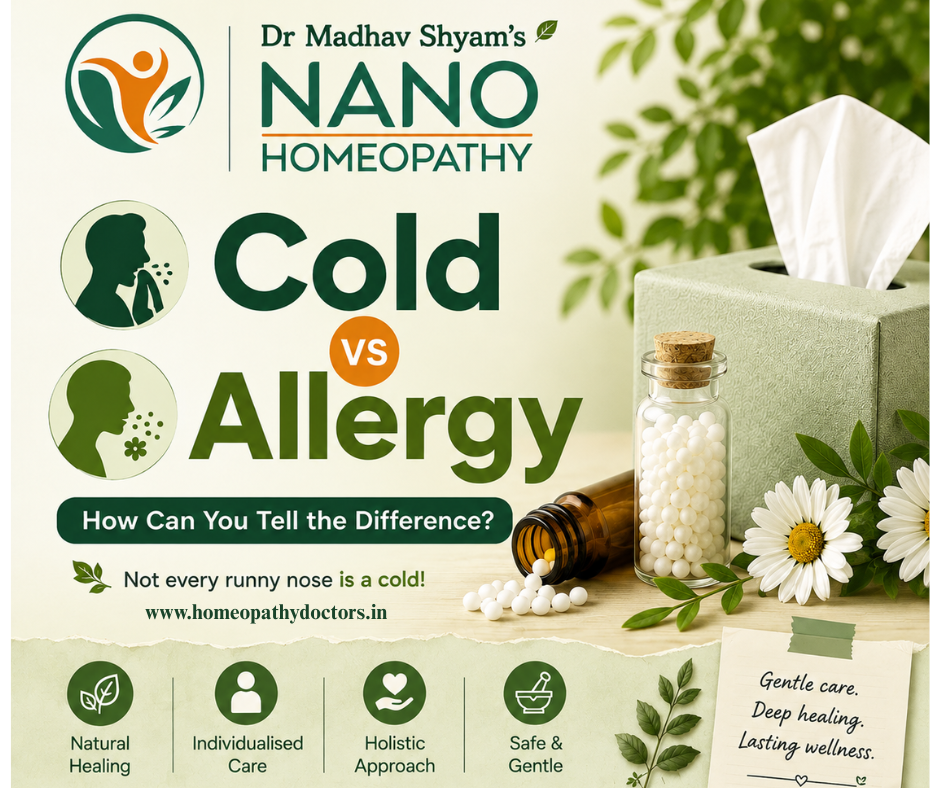
Cold vs Allergy: How Can You Tell the Difference?
A runny nose, sneezing, congestion, and coughing are common complaints—especially when the weather changes. But not every runny nose is caused by a cold. Sometimes, the symptoms may be related to an allergy.
Although colds and allergies can look similar, understanding the differences can help you recognize possible triggers and know when it may be time to consult a doctor.
What Is a Common Cold?
A common cold is usually caused by a viral infection of the upper respiratory tract. Symptoms often develop gradually and generally improve as the infection settles.
Common symptoms include:
Runny or blocked nose
Sore throat
Cough
Sneezing
Tiredness
Mild body aches
Sometimes a fever
A cold is generally temporary and tends to improve over several days.
What Is an Allergy?
An allergy occurs when the immune system reacts to a substance that is normally harmless. Common triggers include dust mites, pollen, mold and animal dander.
Allergy symptoms can include:
Repeated sneezing
Clear, watery nasal discharge
Blocked or stuffy nose
Itchy nose or throat
Itchy, watery eyes
Post-nasal drip
Unlike a cold, allergies typically do not cause fever.
Cold vs Allergy: What's the Difference?
Symptom Cold Allergy
Fever Sometimes Usually absent
Sneezing Common Often frequent/repeated
Itchy eyes Less common Very common
Body aches Sometimes Uncommon
Nasal discharge May become thicker Usually clear/watery
Duration Usually temporary May persist with
exposure
Trigger Usually a virus Dust, pollen, mould
One of the biggest clues: the pattern
If symptoms appear after exposure to dust, pollen, pets, or a particular environment and keep returning, an allergy may be more likely.
If symptoms appear as an acute illness and gradually improve over several days, a common cold may be more likely.
When Should You See a doctor?
Don't rely solely on self-diagnosis if symptoms are severe or persistent.
Consider seeking medical advice if you experience:
Difficulty breathing
High or persistent fever
Severe facial pain
Symptoms that are getting worse rather than better
Repeated episodes of respiratory symptoms
Symptoms that interfere with sleep or everyday activities
A healthcare professional can assess your symptoms, medical history, and possible triggers and determine whether further evaluation is needed.
Where Does Homeopathy Fit In?
If you're considering homeopathy for recurring symptoms, it's important to have an individualized consultation rather than choosing a remedy solely based on a symptom such as sneezing or a runny nose.
Your doctor may consider the overall pattern of symptoms, possible triggers, medical history, and other relevant factors.
Homeopathic care should not replace appropriate medical evaluation or proven treatment, particularly when symptoms are severe or breathing is affected.
Takeaway
Cold and allergy symptoms can overlap, but they aren't the same thing.
Pay attention to how your symptoms begin, how long they last, whether you have a fever, and whether particular triggers repeatedly bring them on.
If you're experiencing recurring sneezing, congestion, or other respiratory symptoms, a professional consultation can help you understand what's going on.
Dr Madhav Shyam’s Nano Homeopathy
Personalized care. Thoughtful consultation. Holistic wellness.
For consultations and appointments, contact the clinic.