
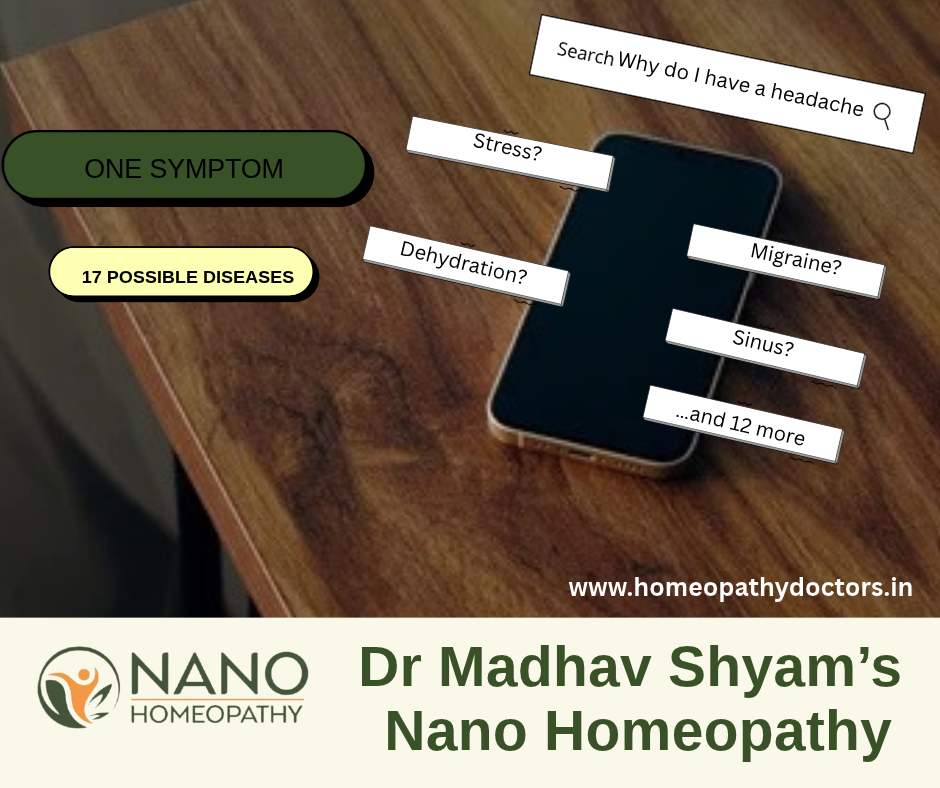
Google Said I Have 7 Diseases…
You notice a headache.
So, naturally, you search for it online.
Five minutes later, you've gone from “Why does my head hurt?” to wondering whether you have a migraine, sinusitis, vitamin deficiency, thyroid problems—or something much more serious.
And suddenly, you're more anxious than you were before you searched.
The problem with searching symptoms online
The internet can provide useful health information, but a symptom rarely has just one possible explanation.
For example, headaches can be associated with many different factors, including stress, dehydration, lack of sleep, vision problems, infections, medications and various medical conditions.
The same applies to symptoms such as fatigue, dizziness, stomach discomfort, itching or changes in sleep.
A symptom is a clue—not a diagnosis.
Why context matters
When a healthcare professional evaluates a symptom, they don't look at the symptom in isolation.
They may want to know:
When did it begin?
How frequently does it occur?
Has it changed over time?
What makes it better or worse?
Are there other symptoms?
Has there been any recent change in your lifestyle, sleep, diet or stress?
What is your relevant medical history?
These details help put an individual symptom into context.
Google can inform you. It cannot examine you.
Online symptom checkers and search results don't know your complete medical history, cannot perform a physical examination, and cannot determine which of the possibilities they list actually applies to you.
That's why reading about a condition online shouldn't automatically lead to a self-diagnosis.
Instead of asking:
“Which disease do I have?”
Try asking:
“What could be causing this symptom, and do I need to get it evaluated?”
Don't let a search result become a diagnosis.
Use reliable health information to educate yourself, but if a symptom is persistent, recurring, worsening, severe, or causing concern, speak with an appropriately qualified healthcare professional.
One symptom can have many possible explanations.
Understanding the whole picture matters.
Dr Madhav Shyam’s Nano Homeopathy
Thoughtful consultation begins with listening to the complete story—not just one symptom.
Keywords