
In today's busy world, it's easy to ignore the signals our body sends us. Long working hours, stress, family responsibilities, and endless to-do lists often leave little room for proper rest. While occasional tiredness is normal, consistently feeling exhausted shouldn't be ignored.
Your body has its own way of telling you that it needs time to recover. Recognizing these early signs can help you make healthier choices before fatigue begins to affect your daily life.
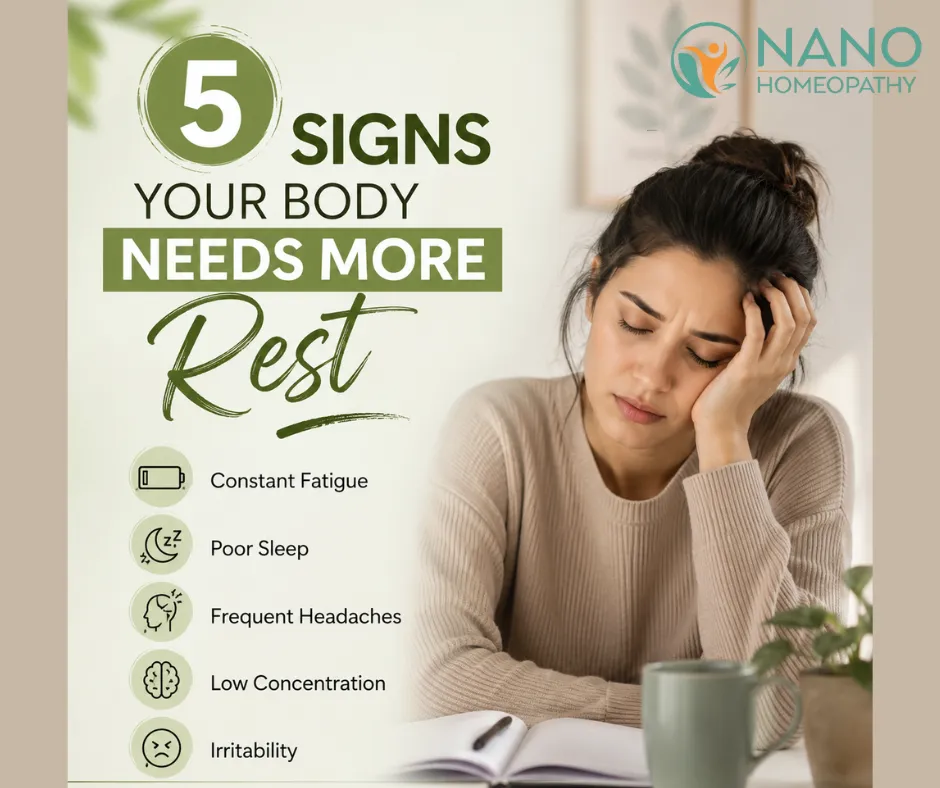
Let's explore five common signs that your body may need more rest.
1. Constant Fatigue
Do you wake up feeling tired even after sleeping for several hours? Or do you find yourself running out of energy halfway through the day?
Persistent fatigue is more than just feeling sleepy. It can make everyday tasks feel overwhelming and reduce your motivation, productivity, and overall quality of life.
While fatigue can result from a busy lifestyle, it may also be associated with poor sleep habits, stress, nutritional deficiencies, or certain health conditions. If the tiredness continues despite adequate rest, it's worth discussing with a healthcare professional.
What You Can Do
Aim for 7–9 hours of quality sleep each night.
Stay hydrated throughout the day.
Eat balanced meals with plenty of fruits, vegetables, and protein.
Take short breaks during long work sessions.
2. Poor Sleep Quality
Getting enough sleep isn't just about the number of hours—it also depends on how well you sleep.
Signs of poor sleep quality include:
Difficulty falling asleep
Waking up several times during the night
Feeling unrefreshed in the morning
Restless or interrupted sleep
Quality sleep allows your body and mind to recover, helping support memory, concentration, mood, and overall health.
Tips for Better Sleep
Maintain a consistent bedtime.
Avoid screens for at least an hour before sleeping.
Limit caffeine later in the day.
Create a quiet, comfortable sleeping environment.
3. Frequent Headaches
If you're experiencing headaches more often than usual, your body may be responding to stress, fatigue, dehydration, or inadequate sleep.
Other common triggers include prolonged screen time, poor posture, skipped meals, and eye strain.
Keeping a record of when headaches occur can help identify patterns and possible triggers.
Important: If headaches are severe, sudden, persistent, or accompanied by symptoms such as confusion, weakness, vision changes, or fever, seek medical attention promptly.
4. Difficulty Concentrating
Have you noticed yourself forgetting simple things or struggling to stay focused?
Mental fatigue often affects concentration, memory, and decision-making. When your brain doesn't get enough rest, even routine tasks can become difficult.
You may experience:
Brain fog
Reduced productivity
Difficulty completing tasks
Poor memory
Lack of motivation
Taking regular breaks, getting enough sleep, and managing stress can often improve mental clarity.
5. Increased Irritability
Sometimes, one of the first signs of exhaustion isn't physical—it's emotional.
When you're not getting enough rest, you may become:
Easily frustrated
Short-tempered
Less patient
Emotionally overwhelmed
More sensitive to everyday stress
Your emotional well-being is closely connected to your physical health. Prioritizing rest and self-care can help improve both.
Why Rest Matters
Rest isn't a sign of laziness—it's an essential part of maintaining good health. During periods of rest, your body repairs tissues, supports immune function, regulates hormones, and restores energy levels. Adequate sleep and recovery also play an important role in maintaining emotional balance and cognitive performance.
Ignoring the early signs of exhaustion can make it harder to recover over time. Listening to your body and making small lifestyle changes can have a positive impact on your overall well-being.
Supporting Your Health
Healthy habits that support better rest include:
Maintaining a regular sleep schedule
Staying physically active
Drinking enough water
Eating a balanced diet
Managing stress through relaxation techniques
Taking time to unwind each day
These simple steps can help improve both physical and mental health.
A Holistic Approach to Well-being
At Nano Homeopathy, we believe that understanding the whole person—not just individual symptoms—is an important part of healthcare. During a consultation, factors such as your sleep, energy levels, lifestyle, stress, and overall health are carefully considered to gain a broader understanding of your concerns.
If you've been experiencing persistent fatigue, poor sleep, frequent headaches, difficulty concentrating, or ongoing irritability, don't ignore these signs. Consulting a qualified healthcare professional can help identify the underlying cause and guide you toward appropriate care.
Final Thoughts
Your body communicates with you every day. Constant fatigue, poor sleep, headaches, reduced concentration, and irritability are signals worth paying attention to.
By listening to these early signs and prioritizing rest, you can support your overall health and well-being. Sometimes, the most powerful step toward feeling better is simply giving your body the time it needs to recover.
Your body has its own way of telling you that it needs time to recover. Recognizing these early signs can help you make healthier choices before fatigue begins to affect your daily life.
Let's explore five common signs that your body may need more rest.
1. Constant Fatigue
Do you wake up feeling tired even after sleeping for several hours? Or do you find yourself running out of energy halfway through the day?
Persistent fatigue is more than just feeling sleepy. It can make everyday tasks feel overwhelming and reduce your motivation, productivity, and overall quality of life.
While fatigue can result from a busy lifestyle, it may also be associated with poor sleep habits, stress, nutritional deficiencies, or certain health conditions. If the tiredness continues despite adequate rest, it's worth discussing with a healthcare professional.
What You Can Do
Aim for 7–9 hours of quality sleep each night.
Stay hydrated throughout the day.
Eat balanced meals with plenty of fruits, vegetables, and protein.
Take short breaks during long work sessions.
2. Poor Sleep Quality
Getting enough sleep isn't just about the number of hours—it also depends on how well you sleep.
Signs of poor sleep quality include:
Difficulty falling asleep
Waking up several times during the night
Feeling unrefreshed in the morning
Restless or interrupted sleep
Quality sleep allows your body and mind to recover, helping support memory, concentration, mood, and overall health.
Tips for Better Sleep
Maintain a consistent bedtime.
Avoid screens for at least an hour before sleeping.
Limit caffeine later in the day.
Create a quiet, comfortable sleeping environment.
3. Frequent Headaches
If you're experiencing headaches more often than usual, your body may be responding to stress, fatigue, dehydration, or inadequate sleep.
Other common triggers include prolonged screen time, poor posture, skipped meals, and eye strain.
Keeping a record of when headaches occur can help identify patterns and possible triggers.
Important: If headaches are severe, sudden, persistent, or accompanied by symptoms such as confusion, weakness, vision changes, or fever, seek medical attention promptly.
4. Difficulty Concentrating
Have you noticed yourself forgetting simple things or struggling to stay focused?
Mental fatigue often affects concentration, memory, and decision-making. When your brain doesn't get enough rest, even routine tasks can become difficult.
You may experience:
Brain fog
Reduced productivity
Difficulty completing tasks
Poor memory
Lack of motivation
Taking regular breaks, getting enough sleep, and managing stress can often improve mental clarity.
5. Increased Irritability
Sometimes, one of the first signs of exhaustion isn't physical—it's emotional.
When you're not getting enough rest, you may become:
Easily frustrated
Short-tempered
Less patient
Emotionally overwhelmed
More sensitive to everyday stress
Your emotional well-being is closely connected to your physical health. Prioritizing rest and self-care can help improve both.
Why Rest Matters
Rest isn't a sign of laziness—it's an essential part of maintaining good health. During periods of rest, your body repairs tissues, supports immune function, regulates hormones, and restores energy levels. Adequate sleep and recovery also play an important role in maintaining emotional balance and cognitive performance.
Ignoring the early signs of exhaustion can make it harder to recover over time. Listening to your body and making small lifestyle changes can have a positive impact on your overall well-being.
Supporting Your Health
Healthy habits that support better rest include:
Maintaining a regular sleep schedule
Staying physically active
Drinking enough water
Eating a balanced diet
Managing stress through relaxation techniques
Taking time to unwind each day
These simple steps can help improve both physical and mental health.
A Holistic Approach to Well-being
At Nano Homeopathy, we believe that understanding the whole person—not just individual symptoms—is an important part of healthcare. During a consultation, factors such as your sleep, energy levels, lifestyle, stress, and overall health are carefully considered to gain a broader understanding of your concerns.
If you've been experiencing persistent fatigue, poor sleep, frequent headaches, difficulty concentrating, or ongoing irritability, don't ignore these signs. Consulting a qualified healthcare professional can help identify the underlying cause and guide you toward appropriate care.
Final Thoughts
Your body communicates with you every day. Constant fatigue, poor sleep, headaches, reduced concentration, and irritability are signals worth paying attention to.
By listening to these early signs and prioritizing rest, you can support your overall health and well-being. Sometimes, the most powerful step toward feeling better is simply giving your body the time it needs to recover.
Keywords